
The Saddlemaker's Hands
What our artisans still practice exactly as saddlemakers always have.
Long before a single stitch touches a bag, our artisans train as saddlemakers. In the workshops of Minas Gerais, saddlery has always come first, and the discipline it demands has shaped riding equipment there for generations. Bossa Brasil grew directly out of that discipline. When we opened our ateliers, we did not hire bag makers and teach them saddlery. We started with saddlers and asked them to bring the same standards to a different object. The four techniques below are the ones they carried across, and every one of them still shapes what we make today.
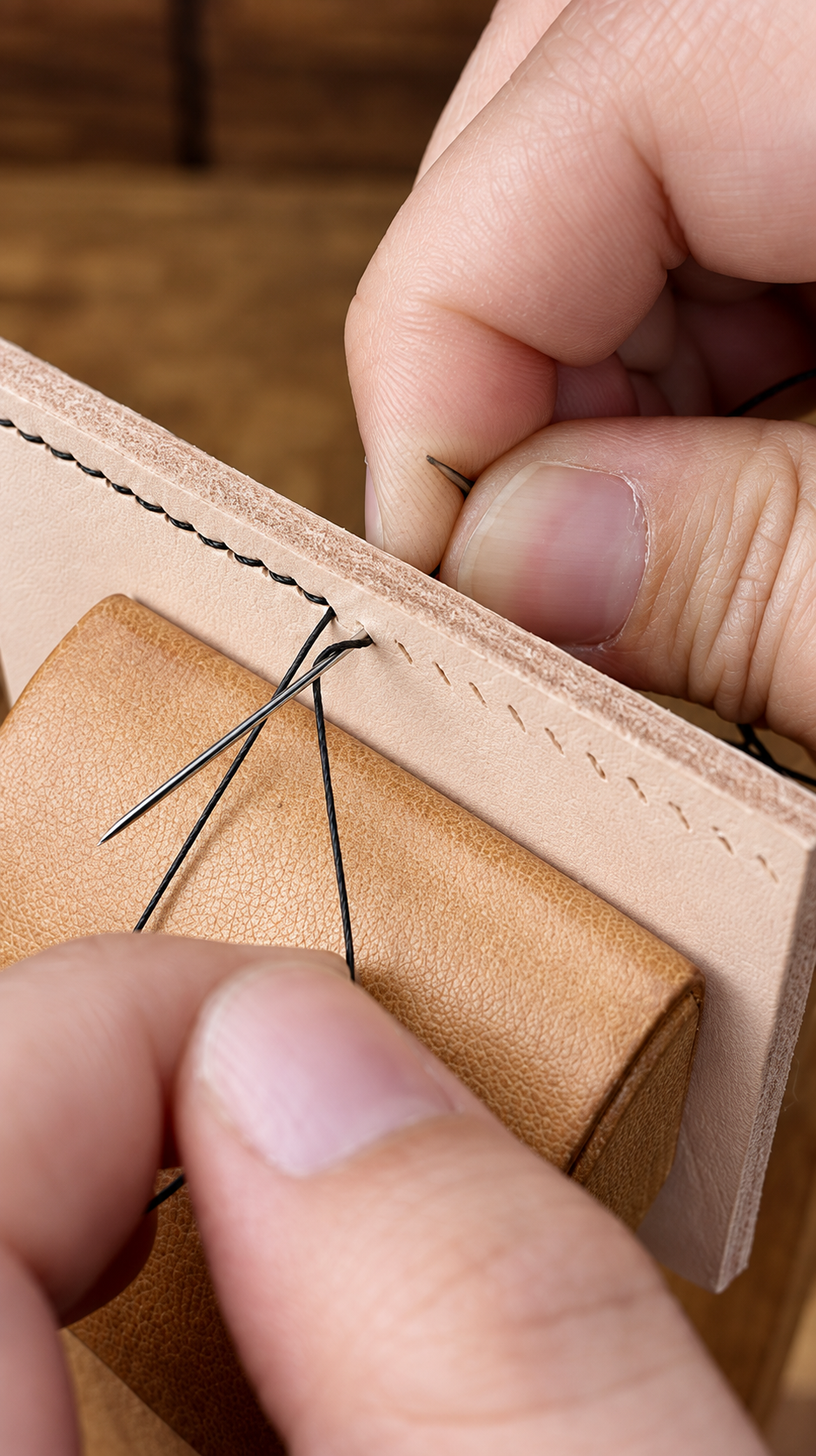
01 · The Saddle Stitch
A saddle stitch is worked by hand with two needles and a single length of waxed thread, passed through the same hole from opposite sides so each stitch locks itself in place. If one stitch is cut, the seam beside it holds. A machine lockstitch cannot do this. On a saddle, this stitch carries a rider's full weight through hours of movement, and a single failed seam can end a ride. Every load-bearing seam in a Bossa Brasil bag, handle joins and structural panels among them, is still closed this way, exactly as it would be on a saddle carrying a rider at full stride.
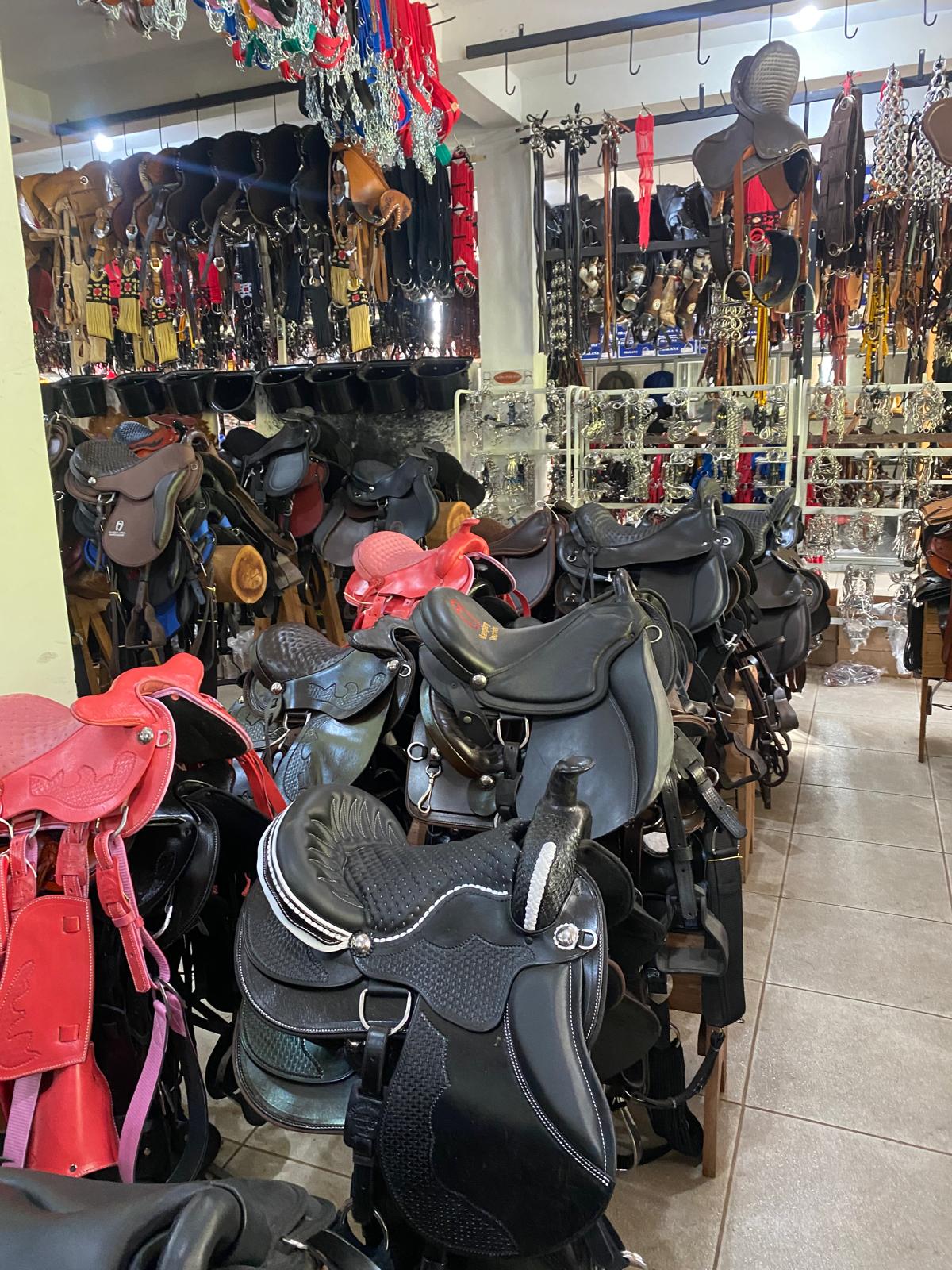
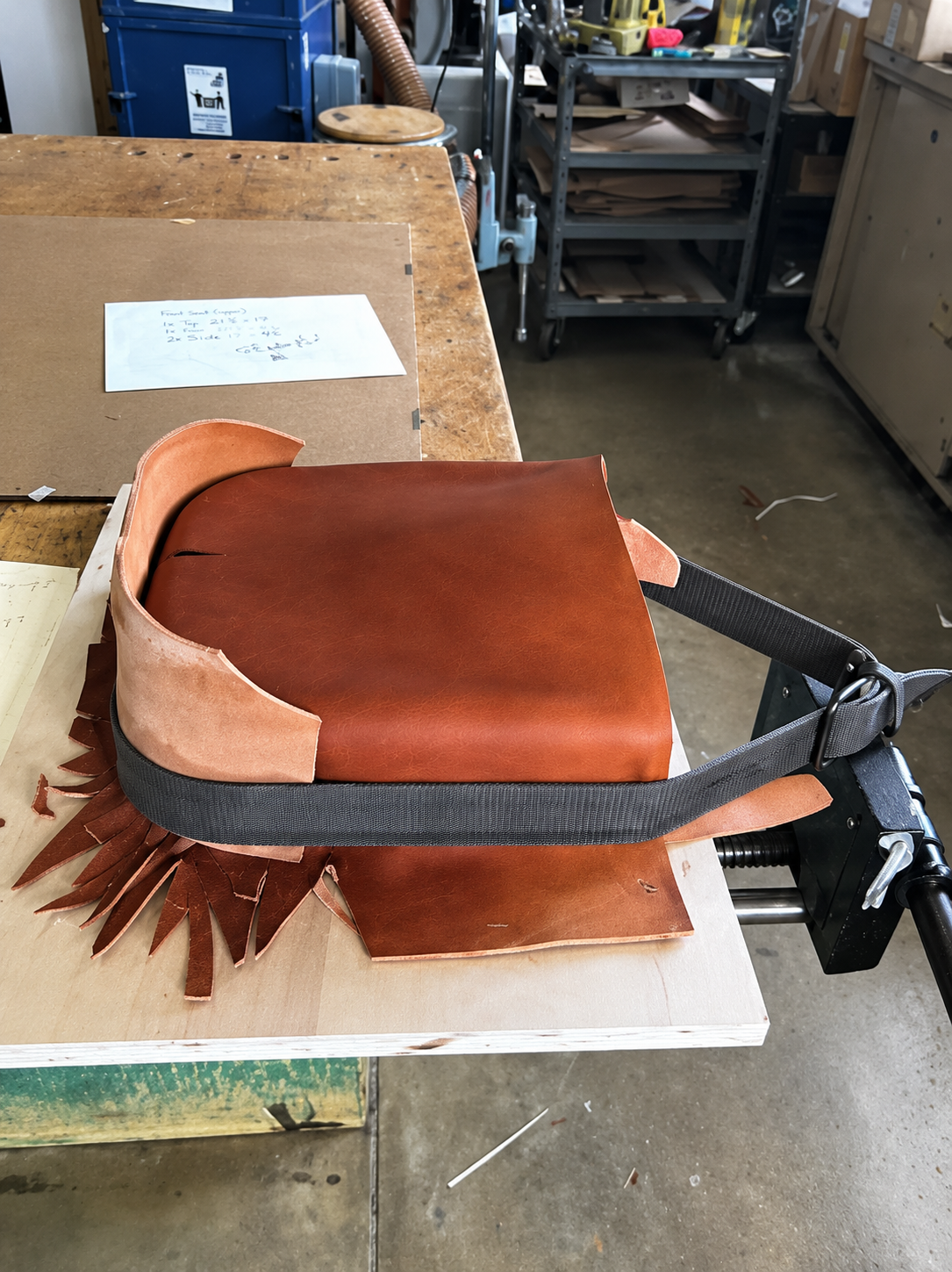
02 · Wet-Molding
Before it holds its shape, leather has none. Saddlemakers dampen vegetable-tanned hide and stretch it over a wooden or steel form, letting it dry slowly, sometimes for several days, until the curve becomes permanent, with no glue and no internal structure added. A saddle seat gets its contour this way. The rigid trunk shape of the Maré and the rounded silhouette of the Ipanema get theirs the same way.
03 · Skiving
Where leather folds, such as a saddle flap over the tree, or a corner where two panels meet on a bag, it has to thin out or the fold will bulk and crack. Skiving shaves the underside of the leather down by hand with a single blade, a fraction of a millimetre at a time, until the fold lies flat. Rush it and the leather splits. This step resists automation, since the control it demands is what keeps the seam intact. Every artisan in our ateliers learns to skive before they are trusted with a finished piece, the same order saddlers have always taught it.
04 · Vegetable Tanning and the Burnished Edge
Vegetable tanning is slow, using tree bark rather than chromium, and it is what allows leather to age instead of simply wearing out. A saddle tanned this way can outlive generations of riders, developing a deeper colour and a softer hand with every year of use. The raw edge of the leather is then sealed and polished entirely by hand, burnished with wax and friction rather than trimmed or painted, and the edge ages the same way as the rest of the piece.
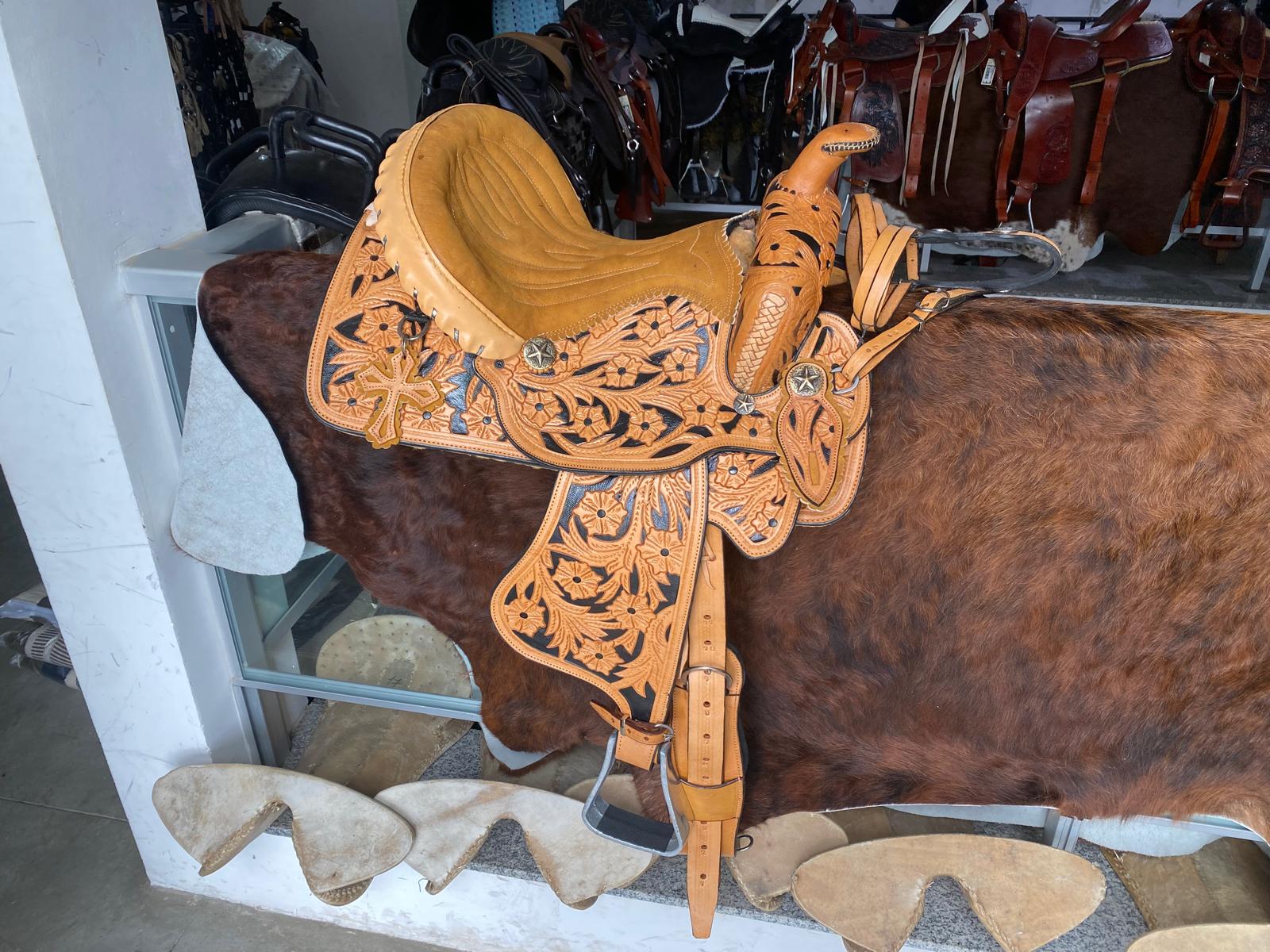
The tooling on a finished saddle is worked directly into the leather by hand, and that same instinct sits behind the crocodile-embossed panels and brass hardware on our own pieces.
A machine can close a seam. Only a hand knows when the leather is ready.
05 · The Saddle Bag
Long before saddlebags carried anything else, they were built to ride behind a saddle, strapped across a horse's back through the ranches of Minas Gerais, carrying what a rider needed for a day that started before sunrise. Their shape came from the horse. The saddlebag needed a rigid trunk that would not shift at a gallop, with corners reinforced against a full day of riding. It was built to hold its shape through hours of movement across rough ground.
The Maré takes its shape directly from that saddlebag. Its trunk form and its reinforced corners are wet-molded and hand-stitched by the same artisans who shape our saddles, using the techniques described above. It carries the discipline of the saddlery into a bag built for the city rather than the ranch.

All four techniques are still practiced in our own ateliers in Brazil, by artisans who trained as saddlemakers first, carrying the same discipline behind the Black Leblon's tribute to 1949, the founding year of the Mangalarga Marchador association at the heart of that heritage.