
Postcards From Copacabana
The Palace, the promenade and the decade that inspires everything we make.
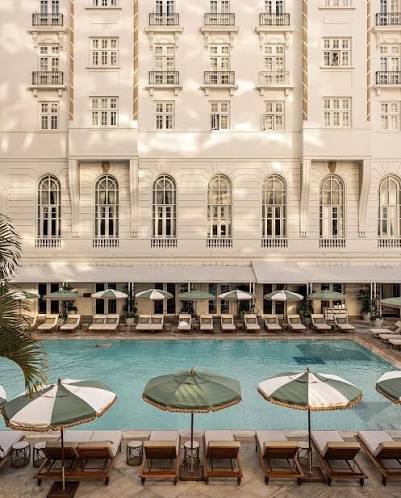
Picture Avenida Atlântica on a summer evening in the 1980s. The sun has slipped behind the hills, the kiosks are filling up, and the black and white waves of the promenade are still warm under bare feet. Someone is playing a guitar near the water. A convertible drifts past the Copacabana Palace with the radio on, and everyone seems dressed for somewhere, even if that somewhere is only the sand.
This is the Rio that lives at the heart of Bossa Brasil. This week, we wanted to take you there.
01 · The Palace
When the Copacabana Palace opened on 13 August 1923, Copacabana was still a quiet stretch of sand at the edge of the city. The Guinle family wanted a hotel worthy of the French Riviera, and the architect Joseph Gire gave them a white palace inspired by the Negresco in Nice and the Carlton in Cannes. Rio had never seen anything like it.
Ten years later, Hollywood came calling. In 1933, Fred Astaire and Ginger Rogers danced together on screen for the very first time in Flying Down to Rio, a film that carried a version of the Palace to cinemas all over the world. In 1938 the Golden Room opened with Maurice Chevalier on stage, and the guest book began to read like a history of glamour: Marlene Dietrich, Josephine Baker, Rita Hayworth, Brigitte Bardot.
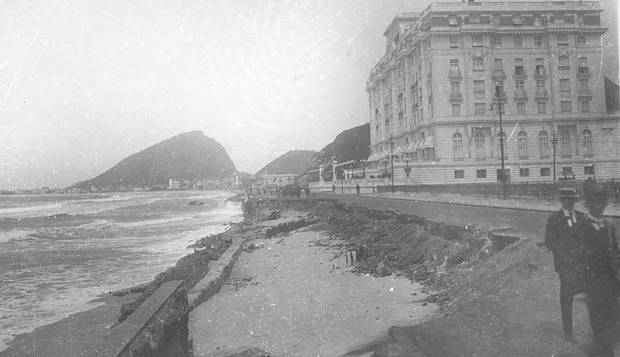
For a century, the world has come to Copacabana to be seen. The Palace taught it how.
02 · Copacabana, 1985
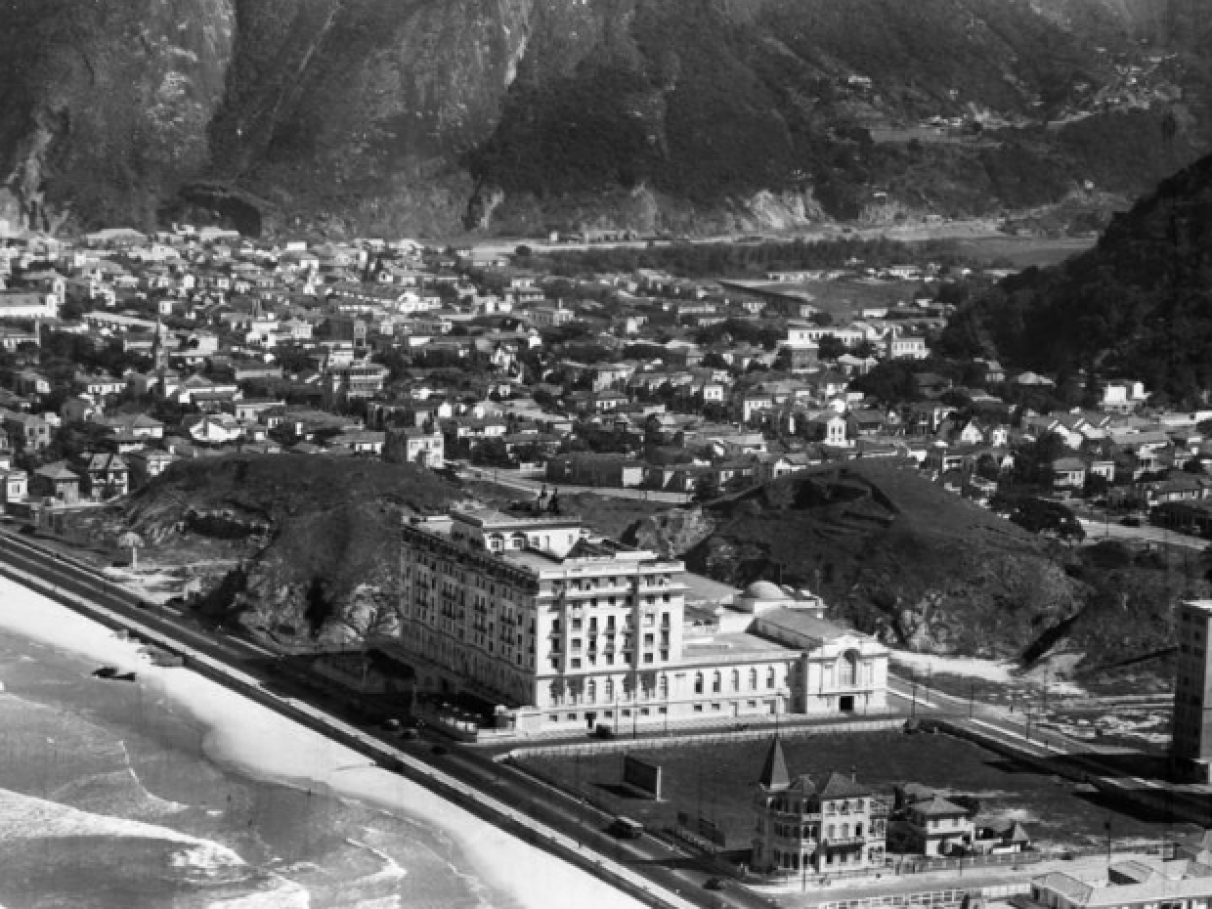
The eighties were the most dramatic decade in the Palace's history. In 1985 the hotel faced demolition, and Rio came close to losing its most famous façade. It was saved when it was declared a protected cultural property, and it has watched over the beach ever since.
That same year, Freddie Mercury arrived at the Palace by helicopter to play the very first Rock in Rio with Queen. After the concert, fans lit 1,500 candles on the sand outside the hotel, spelling out a single word: Queen. We cannot think of a more Copacabana moment.
03 · Dressed in White
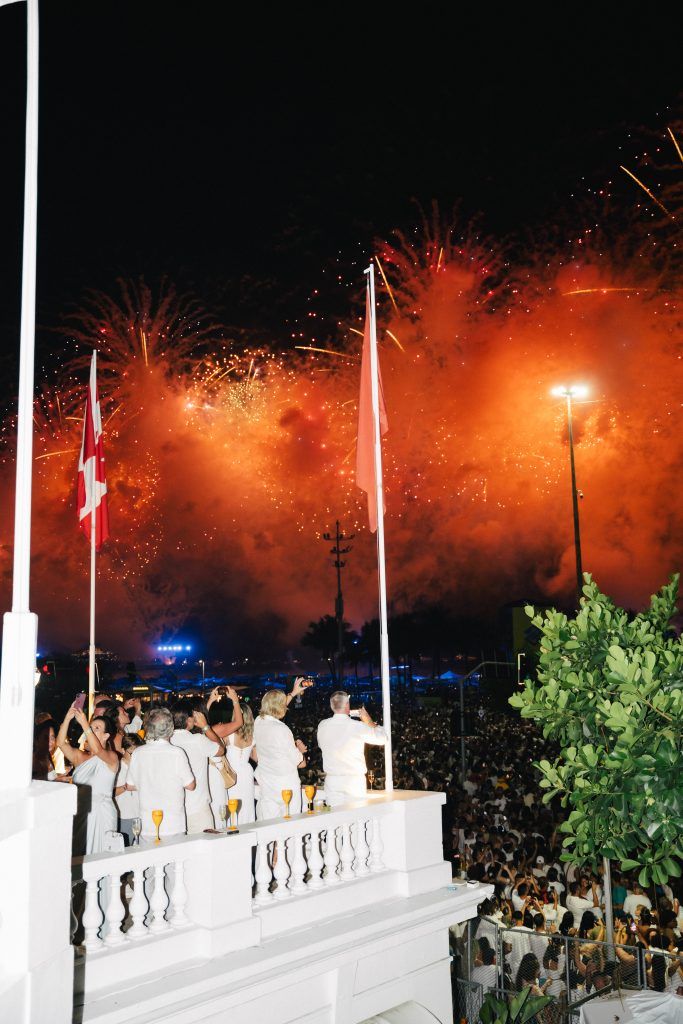
On the last night of every year, Copacabana turns white. The tradition began with devotees of Iemanjá, the goddess of the sea, who dressed in white and carried flowers and small gifts down to the water before midnight. Little by little, the whole city followed.
In 1978, the owner of a steakhouse in Leme gathered his neighbours to pay for a fireworks display over the beach. During the eighties the Méridien hotel added its famous cascade, a waterfall of light pouring down the face of the tower. Today millions gather on the sand each New Year's Eve, still dressed in white, still sending flowers out on the waves.
04 · A Little-Known Fact
Everyone knows the waves of the Copacabana promenade. Almost nobody knows they are Portuguese, or that their story begins in a prison.
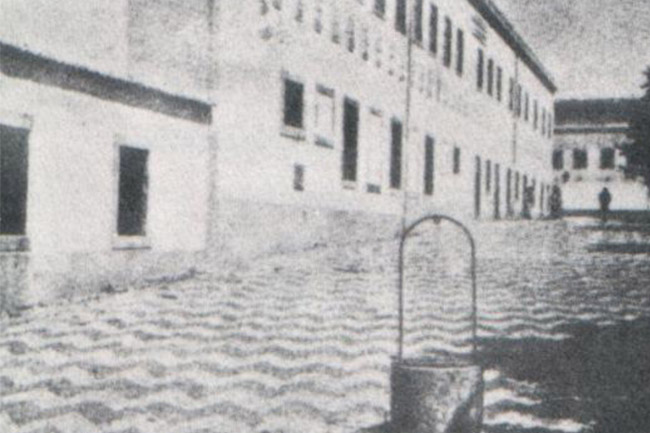
In 1842, the engineer Eusébio Pinheiro Furtado had prisoners from Lisbon's Limoeiro jail, nicknamed the grilhetas after the iron shackles on their legs, pave a courtyard of São Jorge castle by hand. They laid a zigzag of white limestone and black basalt, and the whole city came to look.
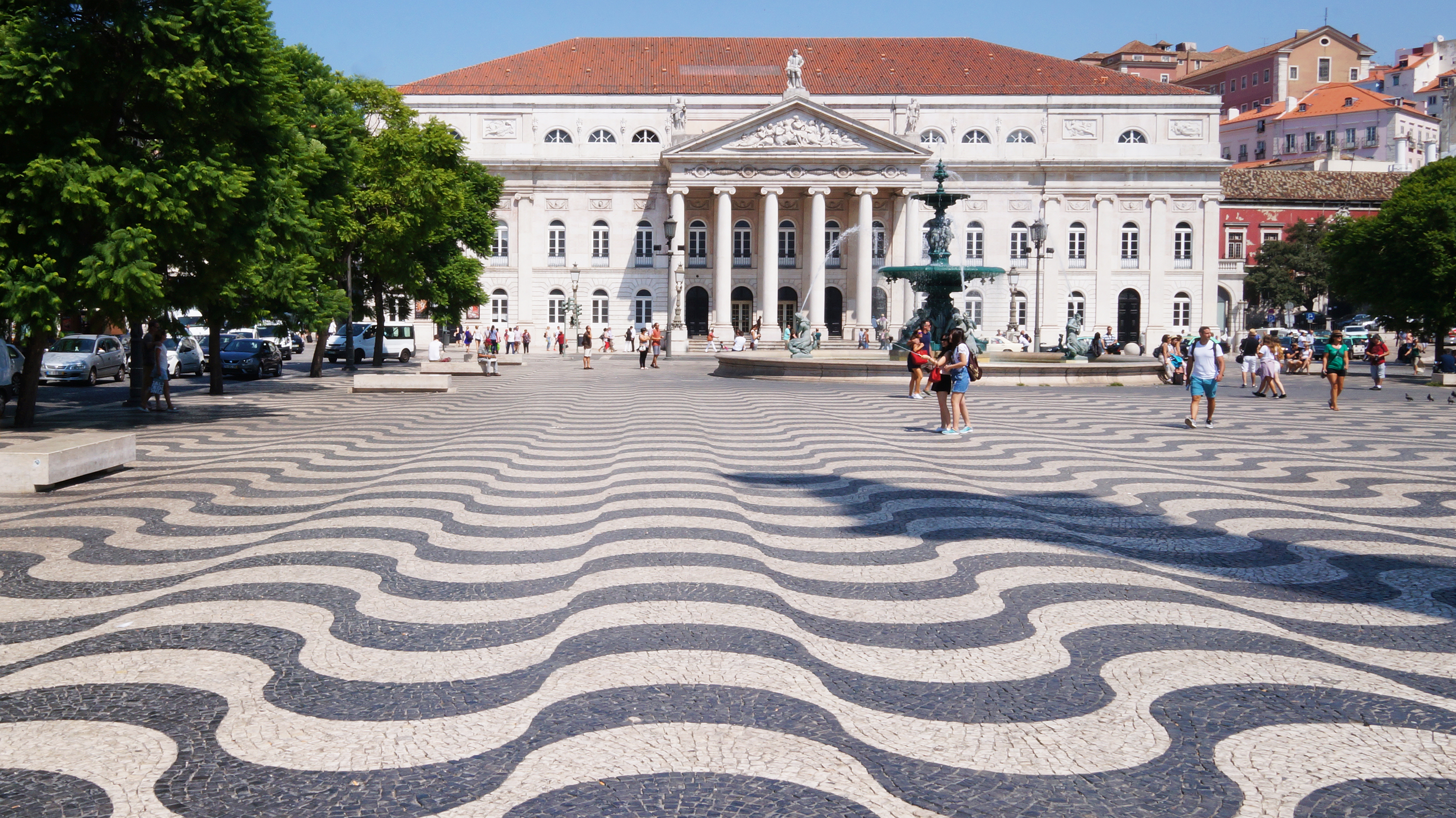
Six years later, Pinheiro Furtado brought the idea to Rossio, the great square of Lisbon. Over 323 days, 8,712 square metres were covered in black and white waves in homage to the sea crossed by Portuguese sailors. Lisbon called it the Mar Largo, the wide sea.
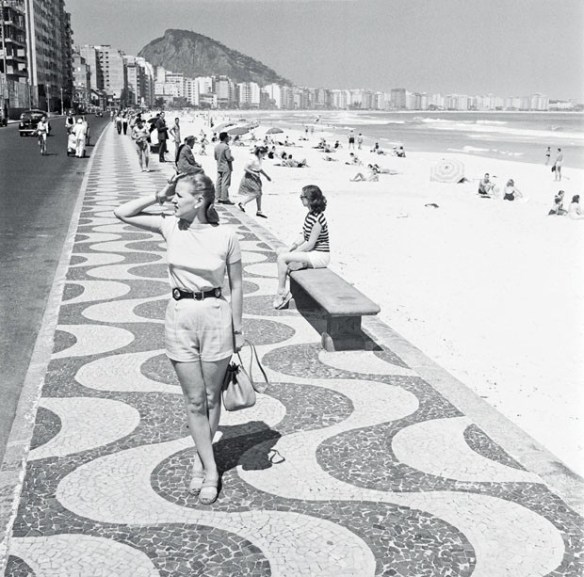
Almost sixty years later, when Mayor Pereira Passos rebuilt the seafront of Rio in 1905 and 1906, he brought in Portuguese calceteiros, master pavers who set every stone by hand, and the waves of Lisbon crossed the Atlantic to Copacabana.
In the 1970s, the landscape architect Roberto Burle Marx widened the curves to the generous proportions we know today. So the next time you walk those four kilometres of black and white, remember that you are walking on a small piece of Lisbon.
05 · The Copacabana Wave
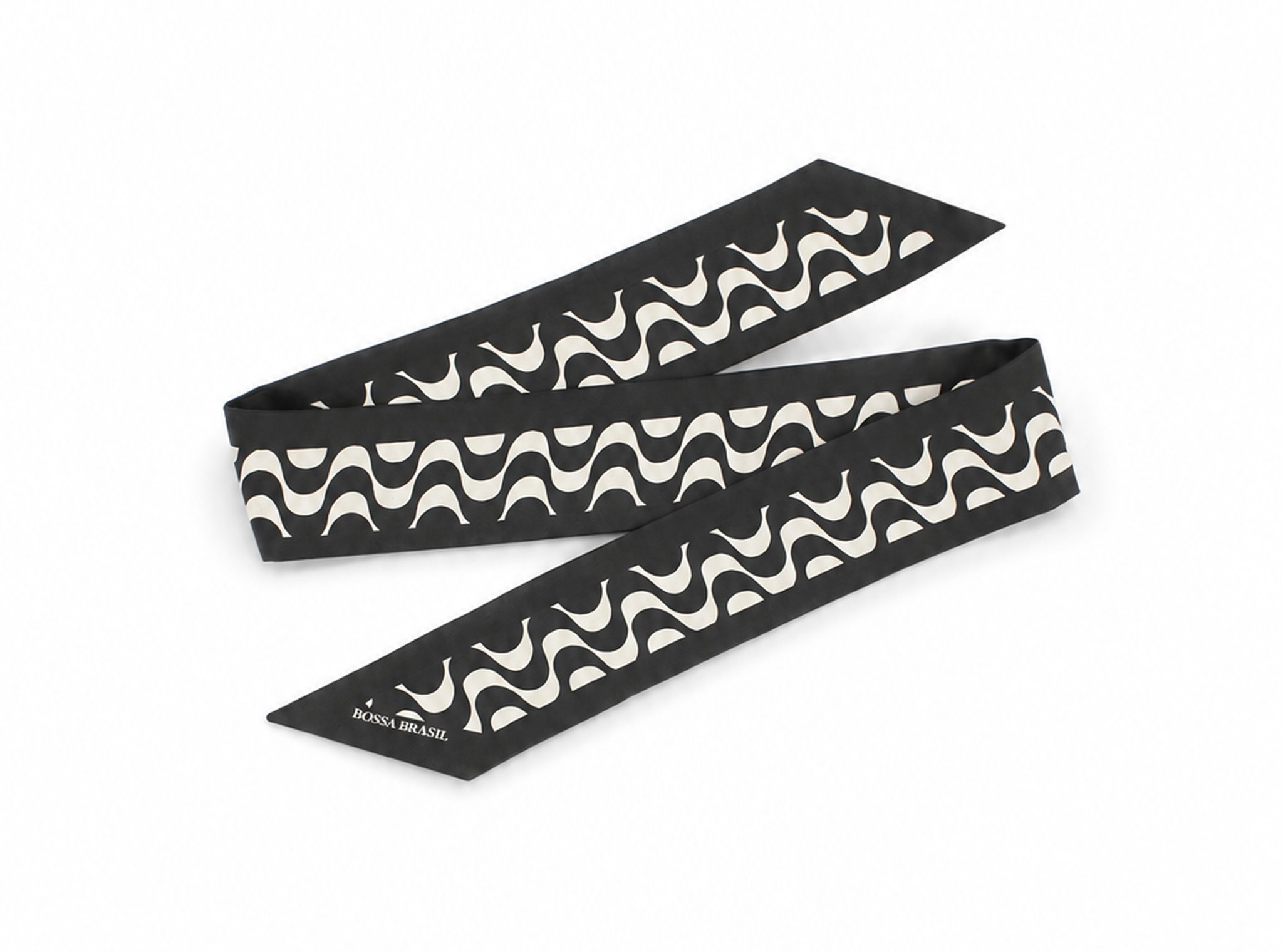
Our Copacabana Wave twilly carries that same pattern, from Lisbon to Rio to you. Tie it around the handle of a Leblon or an Ipanema, knot it at your wrist, or wear it in your hair on a warm evening. It is a small piece of the promenade you can take anywhere.
The Palace in white, the fireworks over the water, the waves beneath your feet. This is where we find our inspiration. Every Bossa Brasil piece carries a memory of that coastline in its curves, its colours and its ease, shaped by hand by our artisans.